
The timing of this reading was serendipitous, in a way, because it came just around the same time that a story broke about the firing of a lesbian theology teaching at a local Catholic school. This has become a somewhat regularly occurring story to hear about, but in the wake of the historic supreme court decision on marriage equality it was a bit of a shock. This has caused a somewhat dramatic reaction both from journalists and the school community from where the teacher was fired. The response from the school and church authority in the region has been blunt and far from empathetic. Most strikingly, it seems to be directly counter to Pope Francis' philosophy of engagement rather than separation in the midst of local and global cultural, and perhaps church doctrinal, changes.
My immediate thought in reading all these articles in tandem was: how can we possibly make schools a safe environment for LGBT students if we don't model that same support for LGBT adults? Imagine being an adolescent at that school that is maturing into their sexuality and, perhaps, questioning their sexual identity. Is there any hope that this teen would think her school would be open minded and supportive? Would the same principal who fired a gay teacher garner any credibility when they tell student's that LGBT persons “must be accepted with respect, compassion, and sensitivity”, as stated by the United States Conference of Catholic Bishops? No. The school's actions took a significant leap backward, has (and will continue) to cause significant harm to an already marginalized group of students, and has irreparably harmed its reputation on a national scale. Simply put, in this case following the rules was wrong.
On December 1st, 1955 a young woman broke the law. She was not ignorant of the law, in fact far from it. Totally cognizant of the rules established by her government she actively defied them and was arrested for it. Her name was Rosa Parks and she helped ignite one of the greatest civil rights movements in history. She, along with countless other brave men and women, lead a movement that helped end (at least on paper) segregation and remove many of the oppressive laws that were holding down an entire population of supposedly free citizens. Rosa Parks is remembered for being a leader, a civil rights activist, a feminist, and a hero. She is not remembered as a criminal, even though that is exactly what she was on December 1st, 1955. She knew that leading meant being willing do something wrong to show that it is actually right.
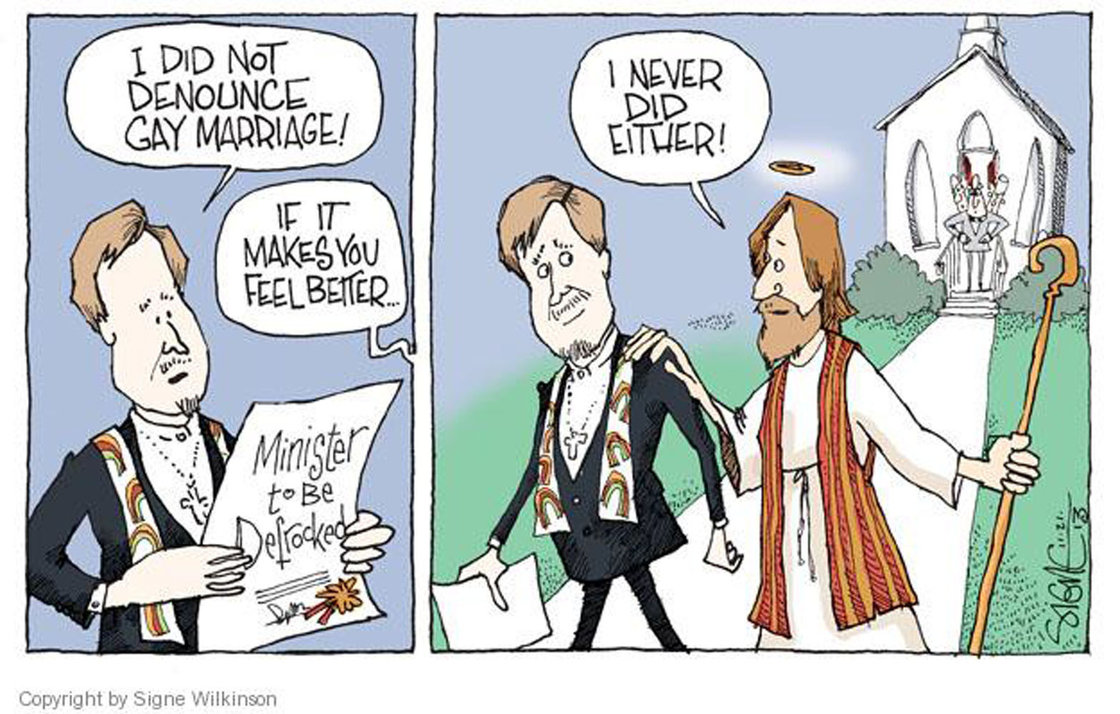 The Catholic Church says it is wrong for two men, or two women, who love each other, are devoted to each other, and respect each other to commit to a lifetime together, often to raise a stable family in a two-parent household. An otherwise excellent and well respected teacher was fired simply because she felt otherwise. The Catholic Church may want to refrain from administering the sacrament of Holy Matrimony to same sex couples but right now it is essentially excommunicating people that are exercising their constitutionally granted rights to Marriage with a person they love. The church is on the wrong side of history and it will take real leadership, be it a school principal, a church pastor, a bishop, or a cardinal to break the rules, like Rosa Parks did, to stand by LGBT teachers, and other members of the church community. This type of leadership is transformational. More importantly, our LGBT children need to know that they really are supported and there is no way for them to feel that way without someone else breaking the rules to show these kids that there is nothing wrong with who they are.

No comments:
Post a Comment